Our Solution
To eliminate inventory fragmentation, the architecture was engineered using tailor-made software principles and robust custom web applications.
1. Warehouse Manager as the primary source of truth
The core inventory platform was developed with Symfony 7.4, MariaDB, and Docker:
-
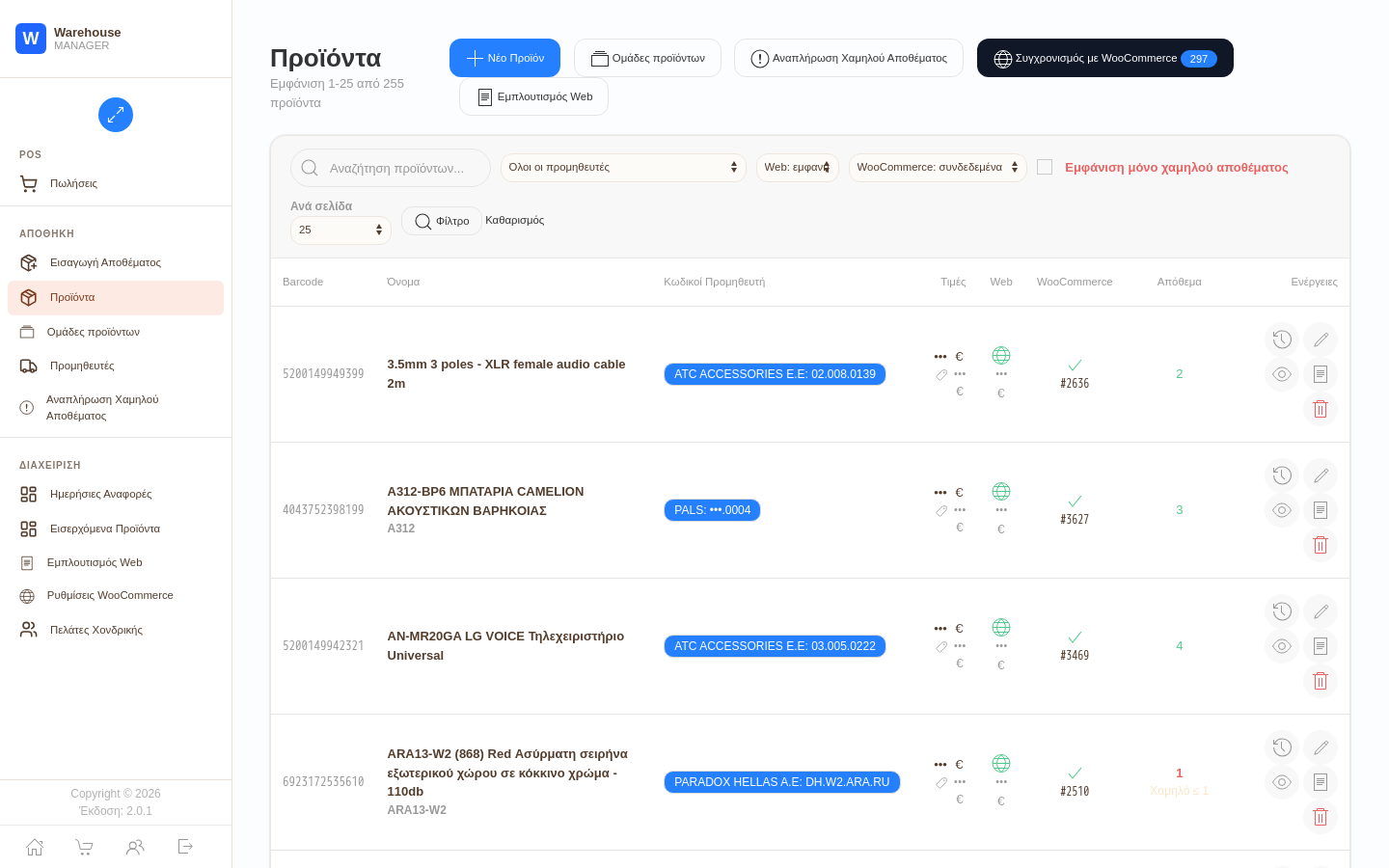
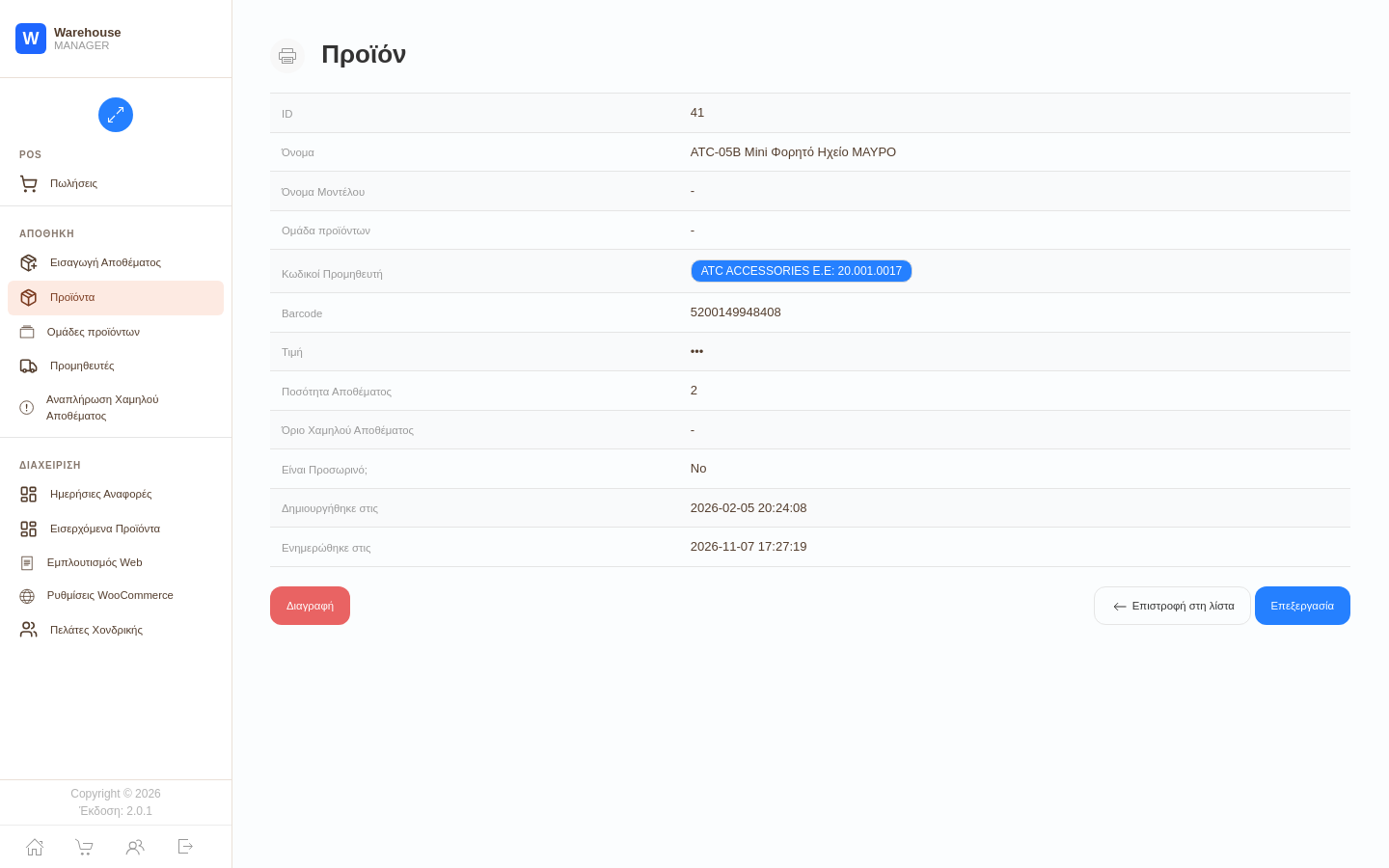
Multi-vendor code mapping: Each product entity maps multiple vendor part numbers alongside international EAN barcodes and unique internal SKUs.
-
Product variant grouping: Automatic pairing of technical parameters into structured variable products for WooCommerce.
-
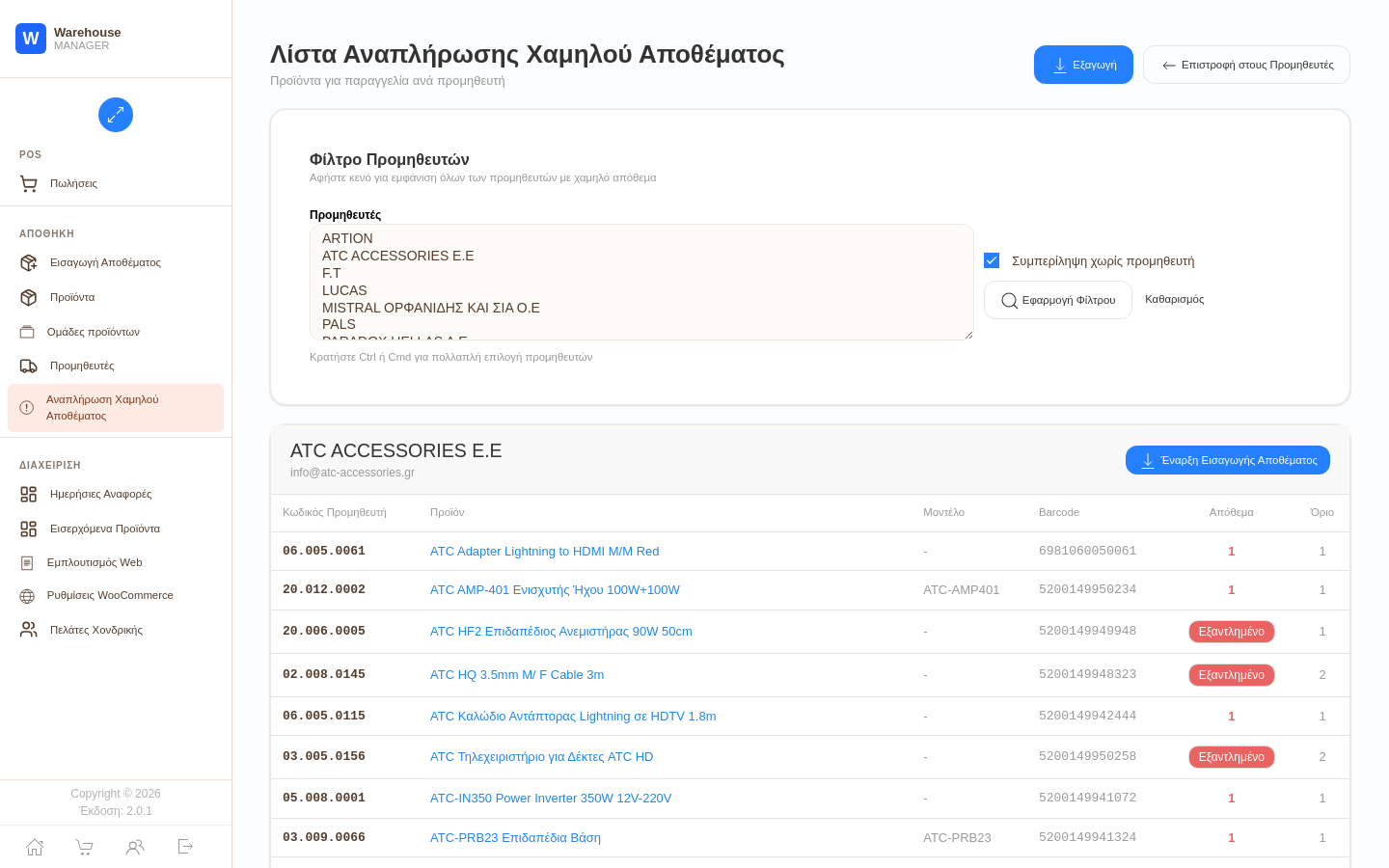
Stock auditing: Comprehensive inventory logs track inbound shipments, retail sales, and low-stock reorder thresholds.
[Image 1: Warehouse Manager product index showing supplier mapping, stock alerts, and WooCommerce synchronization status]
2. Automated AI Web Enrichment
Rather than copying specifications by hand, the platform applies AI and machine learning pipelines powered by Symfony AI:
-
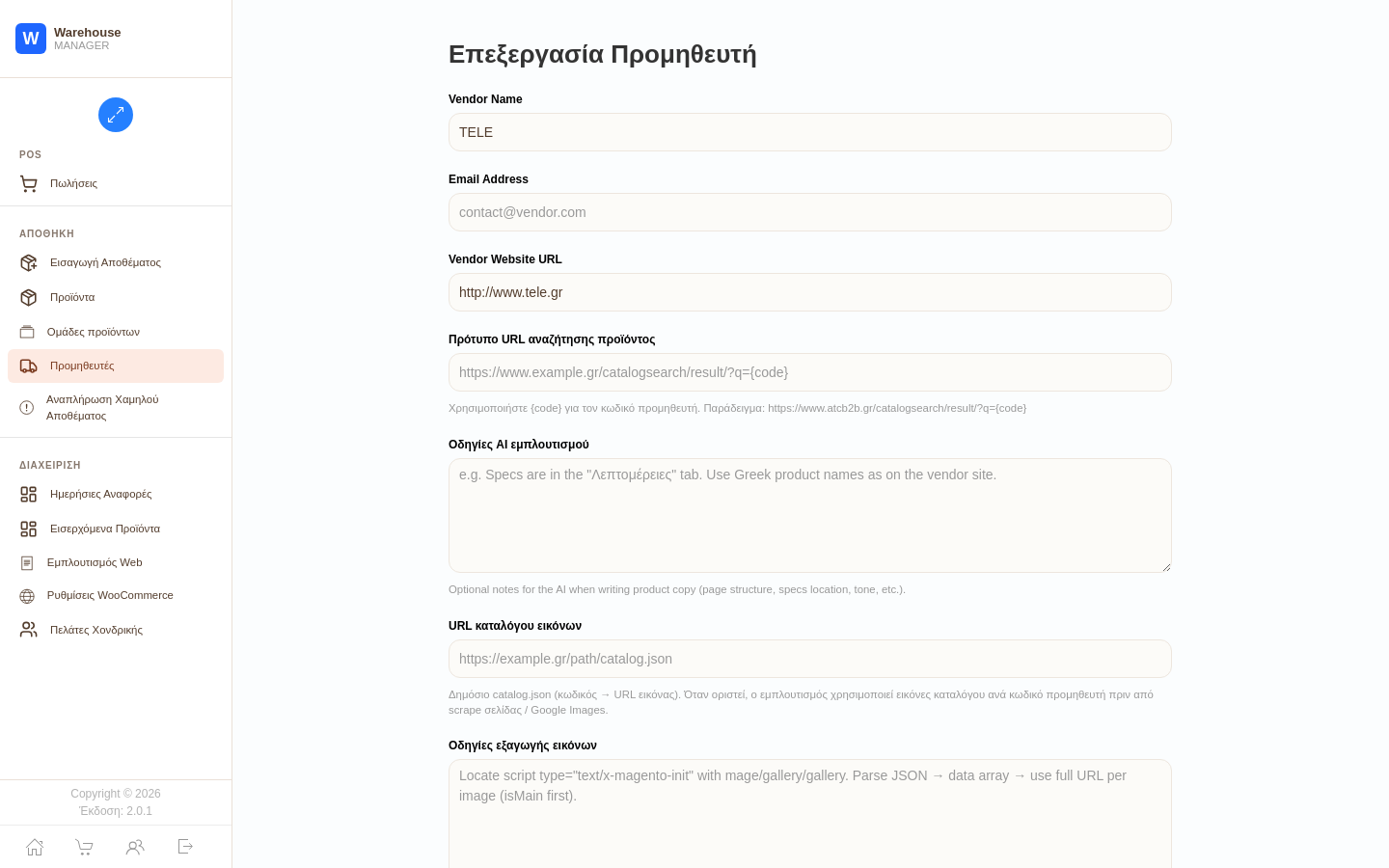
Targeted distributor crawling: The engine crawls supplier URLs using vendor-specific search templates (Magento galleries on atcb2b.gr, J2Store entries on digital-t.gr, JSON catalogs on EPAM).
-
Media extraction: High-resolution images and raw technical specifications are pulled directly into the staging environment.
-
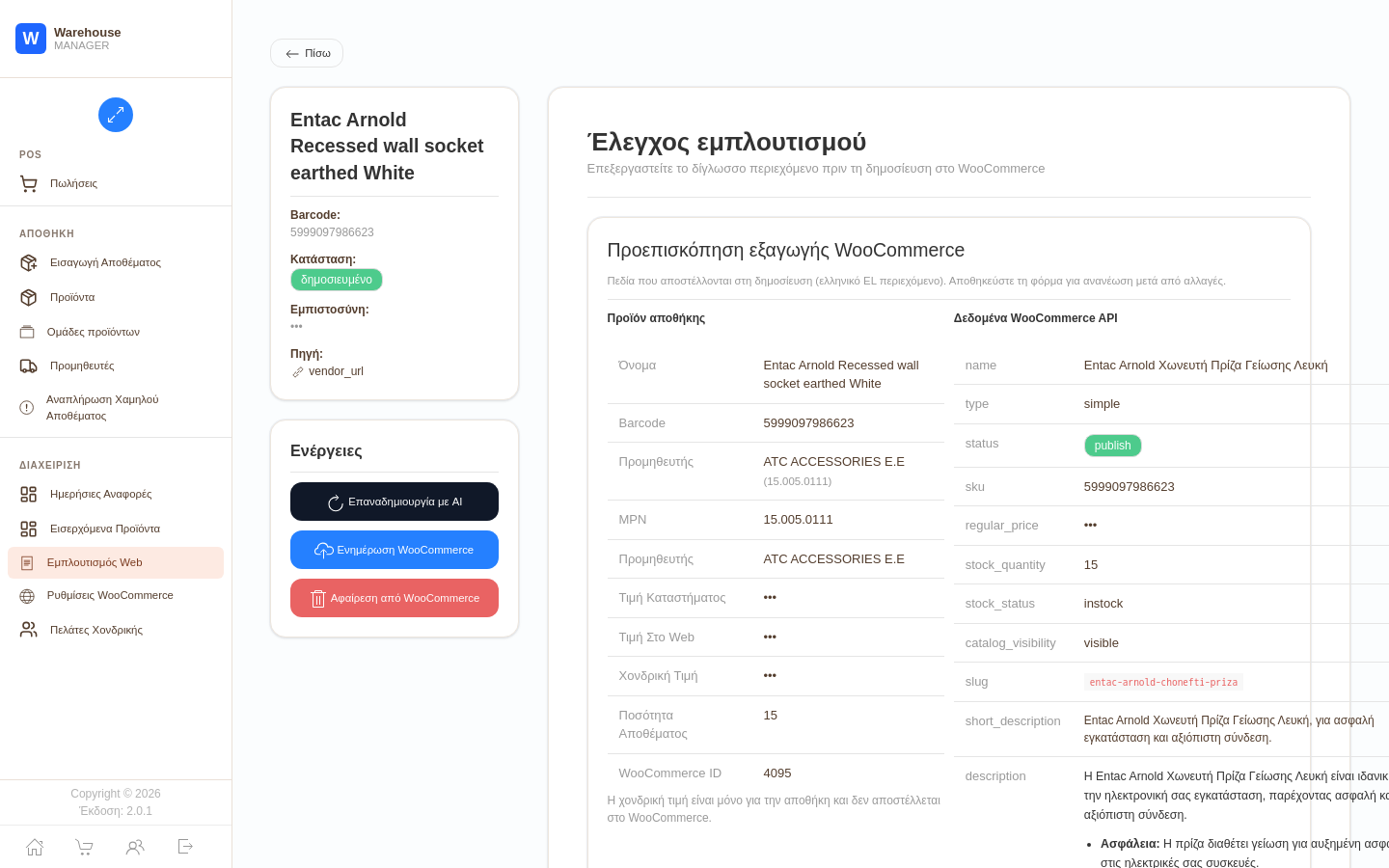
Content generation: The language model drafts bilingual titles, Greek and English technical descriptions, SEO attributes, and category assignments.
-
Human in the loop review: Inventory staff verify every draft before triggering one-click publishing.
[Image 2: Web enrichment review screen showing AI draft generation and one-click WooCommerce publish controls]
3. WooCommerce and YOOtheme Pro integration
The public web store runs on WordPress and WooCommerce using UIkit via YOOtheme Pro. The site receives clean, verified data payloads through the official WooCommerce REST API.
-
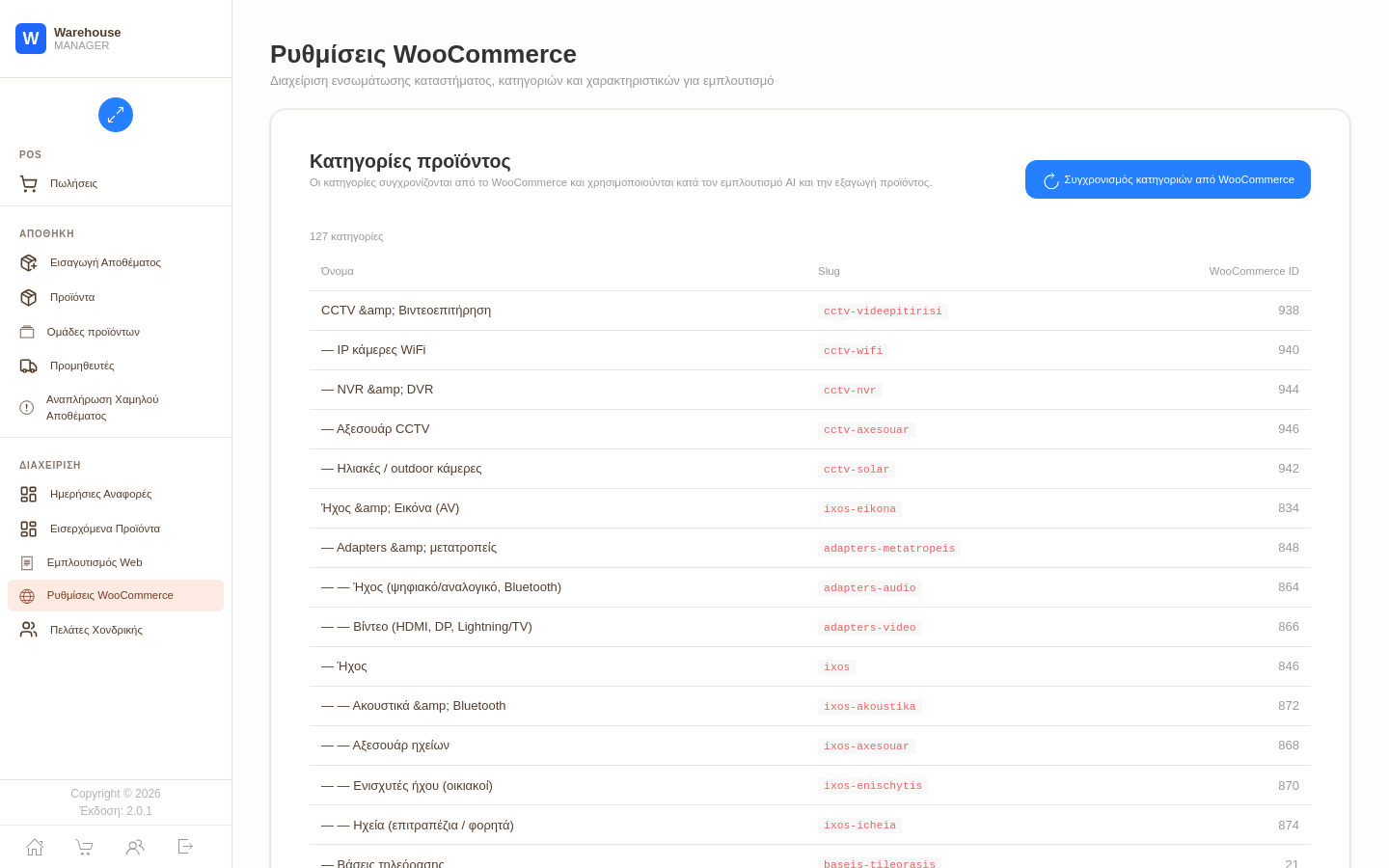
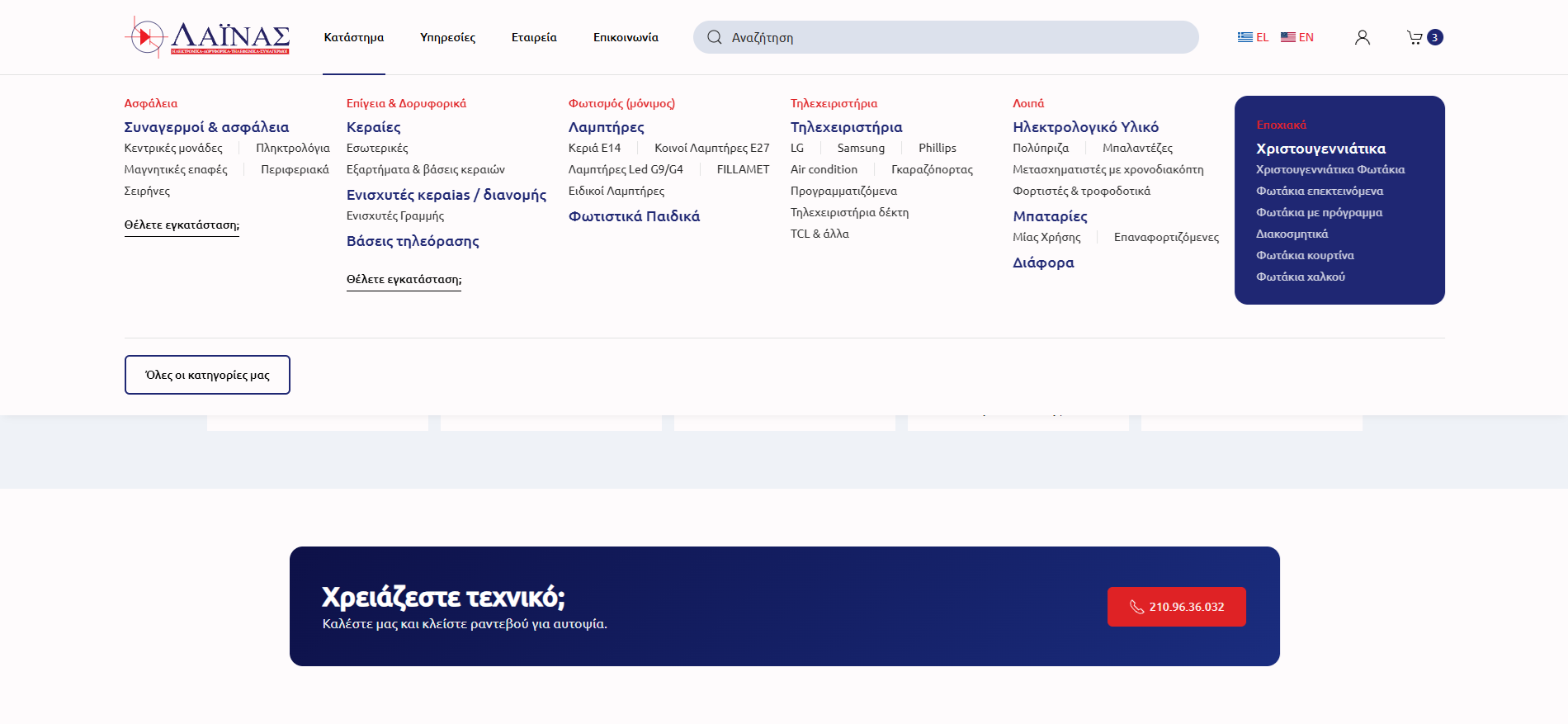
Category mapping: Automated synchronization for 127 category slugs accompanied by 126 dedicated thumbnails.
-
Multilingual support: Seamless two-way language binding in Greek and English via Polylang.
-
Optimized database performance: Bypassing bulk import plugins keeps the WordPress database lean and fast.
4. Electron-based AI Shop Assistant kiosk
The retail floor experience was enhanced with a dedicated desktop application running on Electron 34, Vue 3, and TypeScript:
-
Offline-first architecture: The kiosk never queries the live WooCommerce installation. It synchronizes catalog data directly from the Warehouse API (
GET /api/assistant/products) into a local SQLite database using better-sqlite3. -
Real-time speech recognition: OpenAI Whisper handles bilingual voice input in Greek and English.
-
Conversational retrieval: GPT uses function calling over the local SQLite database, applying Greek accent normalization, stopword filtering, and parameter range detection.
-
Voice response and item cards: OpenAI TTS reads out recommendations, while the touch interface displays cards with photos, live pricing, stock levels, and scannable barcodes.
-
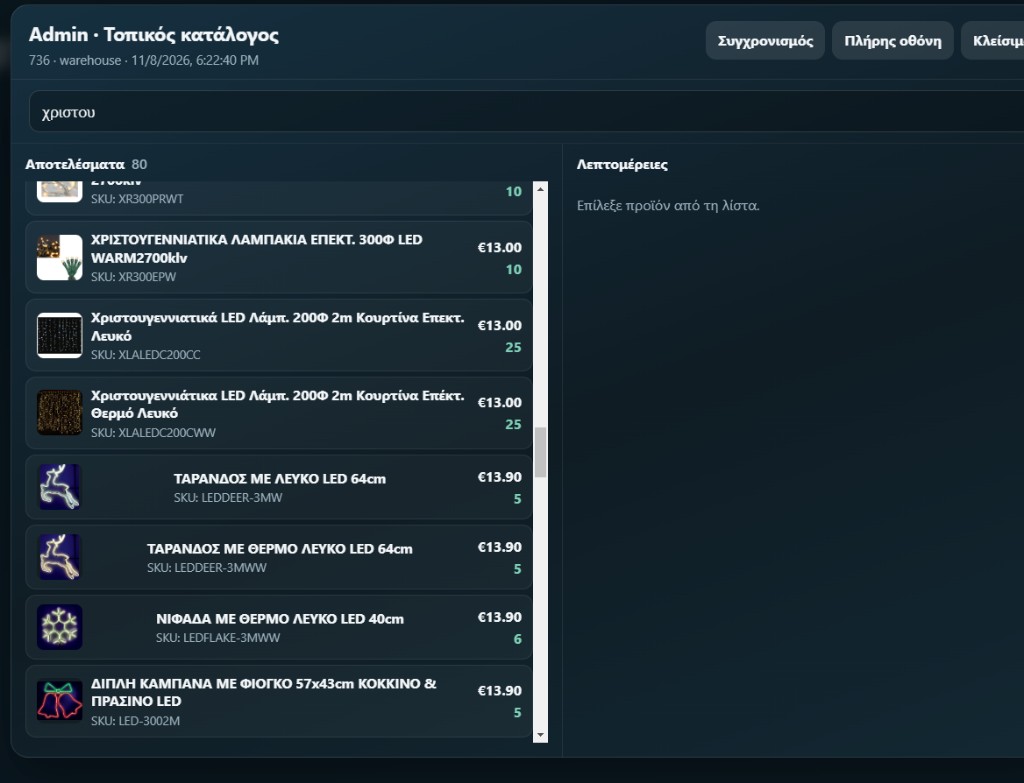
Dedicated staff panel: An administrative screen allows retail employees to search catalog records and trigger manual synchronizations without interrupting the customer display.
[Image 3: AI Shop Assistant touch interface displaying bilingual voice prompts, product recommendations, and staff barcodes]
| Operational area | Traditional retail setup | Lainas integrated platform |
| Vendor product onboarding | Manual copy-pasting from B2B portals | Automated AI enrichment with human validation |
| Code mapping | Ambiguity between supplier SKUs and EANs | Unified product entities mapping vendor codes and EAN barcodes |
| Web catalog updates | Repetitive manual input in WordPress | Direct programmatic sync via WooCommerce REST API |
| In-store assistance | Physical catalog search and floor delays | Instant voice search on kiosk using Whisper and local SQLite |
| Inventory consistency | Discrepancies between physical shelf and web | Single source of truth across warehouse, site, and kiosk |
The Results
Deploying this interconnected architecture produced measurable business results:
-
Over 625 items organized inside the central Warehouse Manager repository.
-
519 SKUs prepared and approved for online indexing.
-
Over 105 active products synchronized to the live WooCommerce store.
-
67 completed AI enrichments featuring full technical copy and image galleries.
-
127 WooCommerce category slugs mapped with dedicated navigation icons.
-
Over 700 catalog records synchronized to the in-store assistant local SQLite cache via paginated endpoints (up to 2,000 items per batch).
-
Faster checkout and floor assistance thanks to instant on-screen barcode rendering.